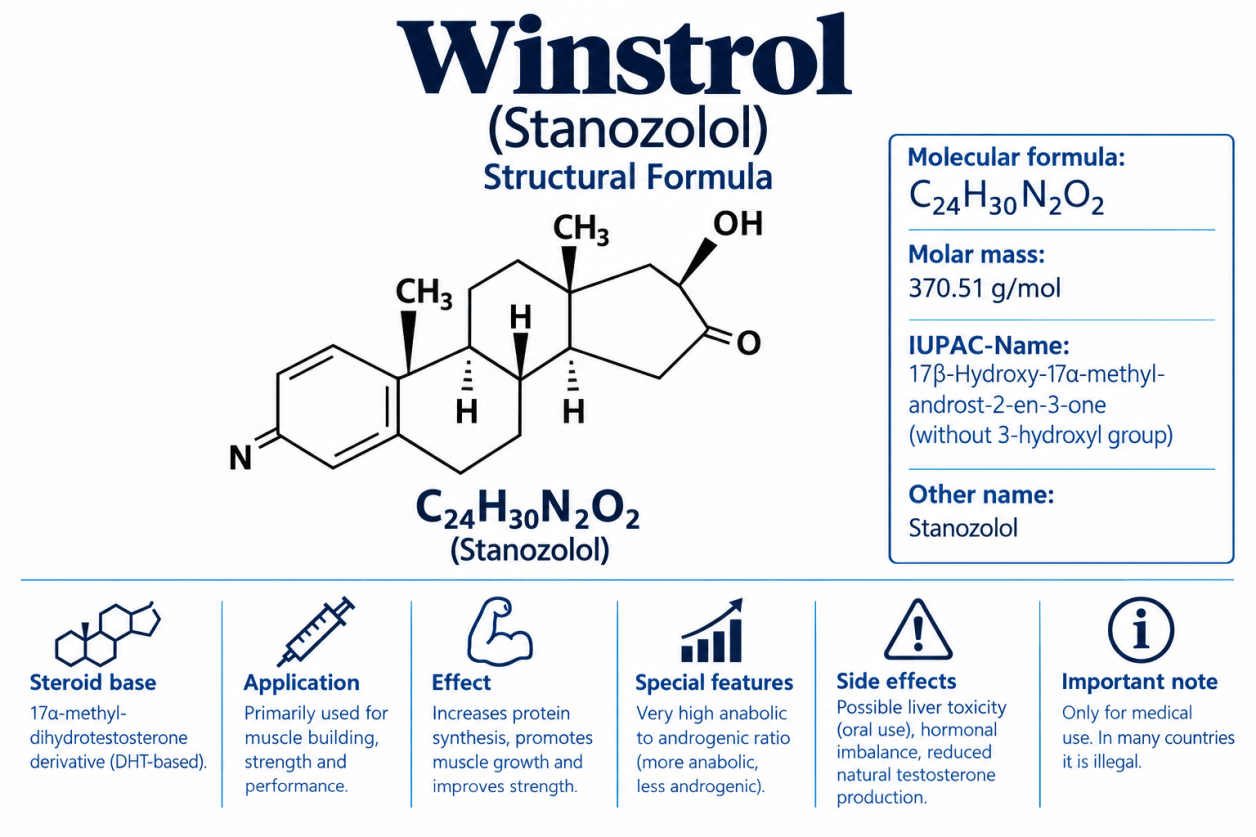
Winstrol (Stanozolol): Effects, Properties and Risks
Winstrol is the well-known brand name for stanozolol, a synthetically produced anabolic-androgenic steroid. The compound belongs to a group of anabolic steroids that have been known for decades and is frequently discussed in connection with bodybuilding and performance-oriented sport.
Winstrol is often associated with muscle growth, increased strength and a more defined muscular appearance. At the same time, the health implications of stanozolol are sometimes underestimated. Its effects on the liver, blood lipids, cardiovascular system and hormonal balance are particularly important aspects that should be considered when assessing the compound objectively.
What Is Winstrol?
Winstrol is the brand name for stanozolol. Pharmacologically, it is an anabolic-androgenic steroid. In medical literature, stanozolol is described as a synthetic steroid with anabolic and androgenic properties.
Structurally, stanozolol belongs to the group of 17α-alkylated steroids. This chemical modification allows oral administration but is also an important reason why the compound can place additional strain on the liver.
Winstrol and Muscle Growth
In bodybuilding, stanozolol is often associated with increased muscle hardness and a more defined appearance. The compound acts through the androgen receptor and thereby influences processes associated with androgen activity in muscle tissue.
However, it is important to distinguish between pharmacological effects and medically appropriate use. The fact that an active substance can produce certain physical changes does not automatically mean that non-medical use is safe.
Anabolic steroids can also suppress the body's natural hormonal production. Prolonged or non-medical use may therefore lead to changes in endogenous testosterone production and fertility.
Winstrol and Fat Loss
In the fitness community, Winstrol is sometimes associated with a particularly “hard” and defined physique. This can create the impression that stanozolol is a conventional fat-burning substance.
This interpretation is misleading. Stanozolol is not a conventional fat burner. Visible body definition depends largely on factors such as energy balance, diet, training volume, muscle mass and body-fat levels.
For sustainable fat loss, nutrition, resistance training, sufficient physical activity and recovery therefore remain the fundamental factors.
Is Winstrol a Testosterone Derivative?
Stanozolol belongs to the group of anabolic-androgenic steroids and shares structural characteristics with other synthetic androgens. At the same time, the compound has specific chemical properties that distinguish it from testosterone and many other steroids.
An important point is that stanozolol **does not aromatise**, meaning that it is not converted into oestrogen. This does not mean, however, that the compound is free from hormonal side effects. Anabolic steroids can significantly interfere with the body's natural hormonal regulation.
Winstrol and the Liver
One particularly important aspect of stanozolol is its potential impact on the liver.
Stanozolol belongs to the group of 17α-alkylated anabolic steroids. Compounds in this group can place considerable strain on the liver. Scientific publications have described cholestatic liver injury and other forms of hepatotoxicity associated with stanozolol.
Reported problems may initially appear as elevated liver enzyme levels. In severe cases, jaundice, cholestasis and serious liver injury have also been documented.
For this reason, an apparently hard or visually appealing effect should never be considered in isolation from the potential health risks.
Effects on Cholesterol and the Cardiovascular System
Anabolic steroids can also affect the lipid profile, including changes in HDL and LDL cholesterol. Their use has also been associated with high blood pressure and other cardiovascular changes.
This is particularly relevant because changes in blood lipids and blood pressure may initially cause few or no noticeable symptoms.
Having a physically fit or well-trained body therefore does not automatically mean that cardiovascular risk is low.
Winstrol and Natural Testosterone Production
Anabolic-androgenic steroids can suppress the body's natural hormone production. In men, this may include reduced endogenous testosterone production, changes in libido and impaired fertility.
The extent of these effects and how long they persist can vary between individuals.
Even after discontinuation, recovery of natural hormone production may take time.
Possible Side Effects of Winstrol
The potential side effects of stanozolol should not be underestimated. They may include:
* liver strain and liver damage
* changes in blood lipid levels
* increased blood pressure
* effects on the cardiovascular system
* suppression of natural testosterone production
* changes in libido
* potential impairment of fertility
* acne and other skin changes
* hair loss in people with a genetic predisposition
* possible virilisation effects in women
Scientific literature also describes various cardiovascular and hormonal risks associated with anabolic steroids.
Why Is Winstrol So Well Known in Bodybuilding?
The popularity of Winstrol is closely associated with its use in performance-oriented sport. Stanozolol has long been linked to strength training and bodybuilding and is also well known in the context of doping.
For this reason, it is important to distinguish between sports-related information and health recommendations.
A compound may be well known in competitive sport without its non-medical use being medically safe.
Winstrol in Competitive Sport and Doping
Stanozolol is a well-known anabolic substance associated with doping controls. The use of such substances can therefore have both health-related and sporting or regulatory consequences.
Athletes who participate in competitions should always check the current anti-doping rules applicable to their sport, governing body and relevant anti-doping organisation.
Safety Information About Winstrol
Winstrol (stanozolol) is not a harmless dietary supplement. Non-medical use of anabolic-androgenic steroids can carry significant health risks.
The liver, cardiovascular system, blood lipid levels and hormonal system may all be affected. Medical case reports have also documented severe liver complications following stanozolol use.
This article is provided solely for neutral information and education. It does not constitute a recommendation for the use, dosage or acquisition of stanozolol. Any medical use should take place under appropriate medical supervision and in accordance with the relevant authorised indications.
Conclusion: Winstrol in Perspective
Winstrol, or stanozolol, is a well-known anabolic-androgenic steroid with a long history in medicine, competitive sport and bodybuilding. The compound has anabolic and androgenic properties and is therefore frequently associated with muscle growth and enhanced physical performance.
At the same time, its potential health risks are a central part of any responsible assessment. In particular, liver strain, changes in cholesterol metabolism, cardiovascular risks and suppression of natural hormone production warrant attention.
Anyone researching Winstrol should therefore consider not only its desired physical effects but also the scientifically documented risks associated with the compound.