TESTOSTERONE ENANTHATE: EFFECTS, MEDICAL USE, RISKS & IMPORTANT INFORMATION
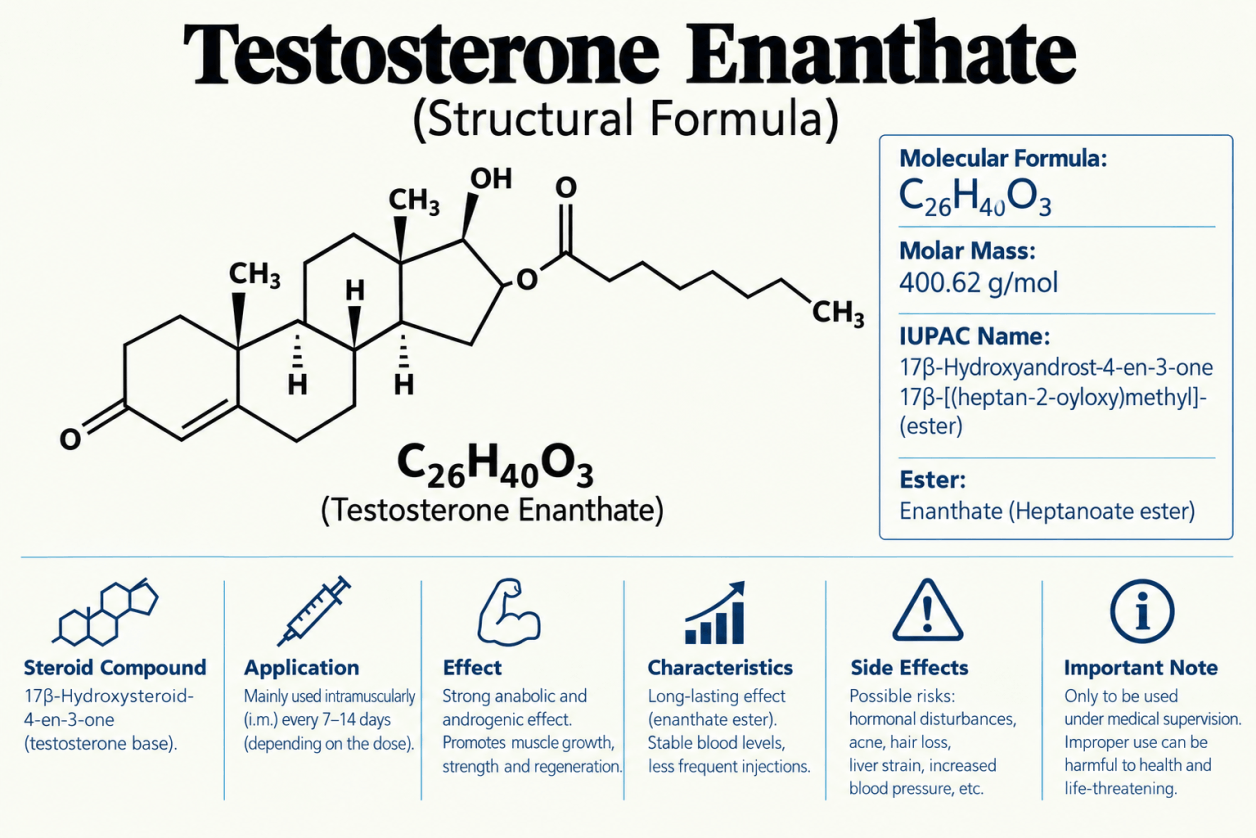
Testosterone Enanthate belongs to the group of longer-acting testosterone preparations and is primarily used as part of medically supervised testosterone replacement therapy. The substance is a depot form of testosterone and is gradually released and made available in the body following administration.
Testosterone performs numerous important functions in men. Among other things, it influences sexual function, the maintenance of muscle and bone mass, the production of red blood cells and various metabolic processes. In cases of medically confirmed testosterone deficiency, hormone replacement therapy may help to improve associated symptoms.
What is Testosterone Enanthate?
Testosterone Enanthate is a testosterone ester which, due to its chemical structure, remains active in the body for longer than non-esterified forms of the hormone.
Following administration, the ester is gradually processed by the body and testosterone is released. This creates a depot effect, allowing the hormone to remain active for a longer period.
Testosterone preparations are used medically, particularly for the treatment of confirmed male hypogonadism. A diagnosis should not be based solely on subjective symptoms such as tiredness or reduced performance, but should involve medical assessment of symptoms together with appropriate laboratory results.
What Functions Does Testosterone Have in the Body?
Testosterone is an endogenous androgen and plays an important role in a range of biological functions.
These include:
* Maintenance of muscle mass and strength
* Support of bone health
* Sex drive and sexual function
* Production of red blood cells
* Development of male sexual characteristics
* Involvement in sperm production
* Influence on body fat distribution and metabolism
Low testosterone levels can be associated with a range of symptoms. These may include reduced sexual desire, erectile problems, decreased muscle mass, fatigue or fertility problems. However, such symptoms can also have other causes and should therefore be medically assessed.
Testosterone Enanthate and Muscle Growth
Testosterone is closely associated with muscle mass and physical performance. This also explains the interest in testosterone preparations within bodybuilding and strength sports.
However, it is important to distinguish between medically indicated testosterone replacement therapy and the non-medically supervised use of testosterone for performance or muscle enhancement.
Testosterone therapy is not intended to artificially raise hormone levels above the physiological range in otherwise healthy men. The EMA describes testosterone medicines as treatments for men with abnormally low testosterone levels associated with hypogonadism.
How is Testosterone Enanthate Used Medically?
The specific treatment approach depends on the individual medicine, diagnosis, blood test results and the patient's individual circumstances.
Medical treatment does not simply begin with a predetermined amount of testosterone. Symptoms, medical history and laboratory results are assessed first. For testosterone medicines, the EMA particularly emphasises confirmation of low testosterone levels through appropriate blood tests.
Dosages, injection intervals and individual treatment regimens should only be determined by a doctor.
What Side Effects Can Testosterone Enanthate Cause?
Like any medicine, testosterone can cause side effects. Possible symptoms include acne, weight gain, mood changes, headaches, joint or muscle pain and reactions at the injection site.
An important possible change concerns the blood count. Testosterone therapy can cause increases in haemoglobin, haematocrit and red blood cell count. Regular medical monitoring is therefore important.
Other possible issues include:
* Increased blood pressure
* Fluid retention
* Changes affecting the prostate
* Changes in blood lipid levels
* Reduced sperm production
* Changes to the skin and hair
* Mood changes
* Sleep problems
Medical information also indicates that testosterone treatment can reduce sperm production. Men who currently wish to have children or are planning to do so should therefore discuss this issue with their doctor.
Testosterone Enanthate and Fertility
An often underestimated issue is male fertility.
Externally administered testosterone can affect the body's natural hormonal regulation. As a result, sperm production may decrease. Testosterone therapy should therefore be carefully considered under medical supervision in men who wish to have children.
Anyone planning to have children should discuss this with a doctor before starting testosterone therapy.
Why Are Regular Blood Tests Important?
Testosterone therapy should not be carried out without appropriate medical monitoring.
Depending on the individual situation, monitoring may include testosterone levels, blood count and haematocrit, liver function and blood lipid levels. The EMA identifies regular monitoring of various laboratory parameters as part of supervised long-term androgen therapy.
Blood pressure may also be relevant, as testosterone can increase blood pressure.
Who Should Take Particular Care?
Before treatment, a doctor should take existing medical conditions and risk factors into account.
Particular attention may be required in people with existing cardiovascular disease, high blood pressure, elevated red blood cell counts, prostate conditions, sleep apnoea or liver or kidney disease.
Interactions with other medicines may also be relevant. The treating doctor should therefore be informed about all medicines, food supplements and other preparations being taken.
Testosterone Enanthate in Bodybuilding
In bodybuilding, testosterone is frequently discussed in connection with muscle growth, strength and performance enhancement. Medical use, however, should not be equated with non-medically supervised use for sporting purposes.
In particular, amounts higher than those medically indicated may increase the risk of adverse effects. Medical information warns of potential cardiovascular problems, increased blood pressure, changes in blood parameters and reduced sperm production associated with inappropriate or high-dose use.
Testosterone is therefore not an ordinary food supplement and should not be used independently for performance enhancement.
Testosterone Enanthate: What Should Be Considered When Stopping Treatment?
The body's natural testosterone production can be affected by externally administered testosterone. For this reason, long-term treatment should not be changed or discontinued without medical advice.
Following the use of amounts higher than those recommended by a doctor, stopping treatment may be associated with symptoms such as fatigue, low mood, irritability, sleep problems or reduced libido.
Anyone experiencing symptoms following treatment should seek medical advice rather than attempting to counteract them independently with other hormones or medicines.
Conclusion: Testosterone Enanthate Explained
Testosterone Enanthate is a longer-acting form of the hormone testosterone and is primarily used to treat medically confirmed testosterone deficiency.
Safe treatment requires an appropriate diagnosis, suitable blood tests and regular medical monitoring. This involves more than simply measuring testosterone levels; blood count, blood pressure, individual risk factors and, where relevant, fertility also play an important role.
Anyone interested in Testosterone Enanthate should therefore clearly distinguish between medically supervised hormone replacement therapy and non-medically supervised use in sport.
Safety Information
This article is intended solely for general information and does not replace medical advice. Testosterone Enanthate is a medicinal substance. Use for performance or muscle enhancement without a medical indication can involve significant health risks. Dosage, administration, treatment duration and discontinuation should be managed by a qualified doctor. Anyone with existing medical conditions, fertility concerns or new symptoms should seek appropriate medical advice.