TESTOSTERONE DEPOT: EFFECTS, MEDICAL USE, RISKS & IMPORTANT INFORMATION
Testosterone Depot refers to testosterone preparations in which the active substance is released from a depot in the body over an extended period. Such preparations are primarily used as part of medically supervised testosterone replacement therapy when a medically confirmed testosterone deficiency is present.
Testosterone is a naturally occurring sex hormone and plays an important role in the development of male sexual characteristics, sexual function, bone metabolism, muscle mass and muscle strength. However, a low testosterone level alone does not automatically mean that testosterone therapy is required. Diagnosis should take both symptoms and repeatedly low blood testosterone levels into account.
What is Testosterone Depot?
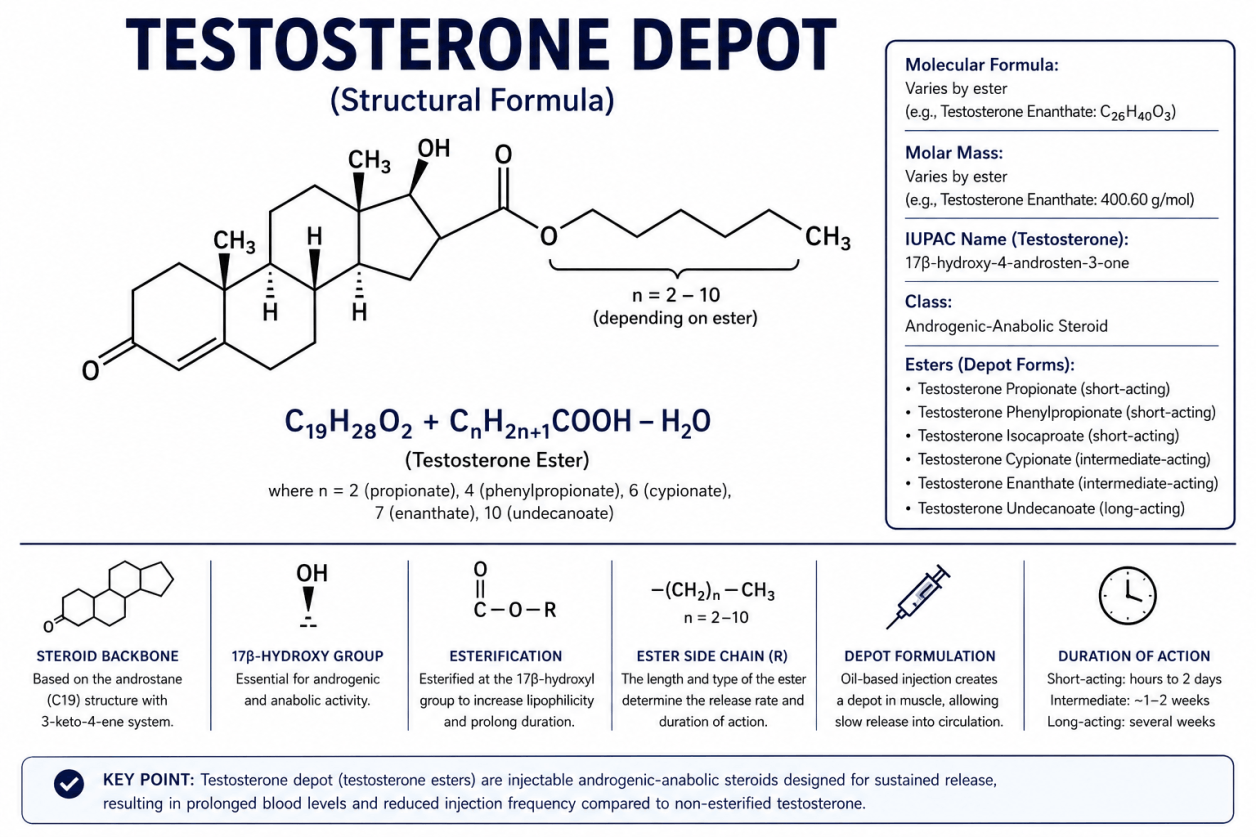
Testosterone Depot refers to testosterone administered in the form of a longer-acting preparation. Depending on the active substance used, the pharmacological properties and duration of release can differ.
Known forms of testosterone esters include, for example:
* Testosterone Enanthate
* Testosterone Cypionate
* Testosterone Undecanoate
These preparations should not simply be regarded as interchangeable. They differ in terms of active-substance release, duration of action and medical use.
Particularly long-acting preparations may help maintain testosterone concentrations relatively steadily over a longer period. The choice of preparation should therefore be made by a doctor based on the individual medical situation.
How Does Testosterone Work in the Body?
Testosterone belongs to the group of androgens. In men, it is produced primarily in the testes and is regulated by a complex hormonal system.
Testosterone influences various biological processes, including:
* Development and maintenance of male sexual characteristics
* Sexual function and libido
* Maintenance of muscle mass and muscle strength
* Bone metabolism
* Production of red blood cells
* Energy and metabolic processes
In cases of confirmed hypogonadism, medically supervised testosterone replacement therapy may improve certain symptoms and consequences associated with hormone deficiency. However, the Endocrine Society recommends testosterone therapy only in men with appropriate symptoms and unequivocally and repeatedly low testosterone levels.
Diagnosing Testosterone Deficiency Correctly
Fatigue, reduced libido, declining performance or changes in body composition can have many different causes. A single test result is therefore not sufficient to reliably diagnose testosterone deficiency.
According to recommendations from the Endocrine Society, the diagnosis should be confirmed in men with compatible symptoms by repeatedly low testosterone levels. Morning blood measurements are particularly important for this purpose. Further medical assessment can then help determine the underlying cause of the hormone deficiency.
Medical conditions, medicines, obesity and other health-related factors can also influence testosterone levels. It is therefore important not to consider a laboratory value in isolation.
Testosterone Depot and Muscle Growth
Testosterone is frequently discussed in the fitness and bodybuilding community in connection with muscle growth and strength training. However, a clear distinction must be made between medically necessary testosterone replacement therapy and the non-medically indicated use of androgenic substances.
Medical testosterone therapy is not a general method for increasing strength, athletic performance or physical appearance in otherwise healthy men. The Endocrine Society explicitly advises against using testosterone for performance enhancement or to improve physical appearance.
For sustainable muscle growth, structured training, adequate nutrition, recovery and long-term training planning remain key factors.
What Side Effects Can Testosterone Cause?
Testosterone therapy can cause side effects. Regular medical monitoring is therefore important.
Possible adverse effects may include:
* Increased red blood cell count
* Acne and oilier skin
* Changes affecting the prostate
* Possible worsening of existing sleep apnoea
* Reduced sperm production
* Effects on fertility
* Reactions or discomfort at the injection site
The Endocrine Society identifies an increased red blood cell count as a particularly relevant risk and recommends regular monitoring during treatment.
Testosterone and Fertility
One important aspect is often underestimated: externally administered testosterone can affect the body's natural hormone production.
Sperm production may decrease as a result. Men who currently wish to have children should therefore discuss the possible effects on fertility with a doctor before starting testosterone therapy. The Endocrine Society generally recommends against testosterone therapy in men who are planning to pursue fertility in the near future.
Why Are Regular Blood Tests Important?
Testosterone therapy should not follow a "start once and then never monitor it again" approach.
Depending on the individual circumstances, doctors monitor treatment response, potential side effects and relevant laboratory values. The prostate and certain blood parameters may also form part of ongoing monitoring.
Current Endocrine Society guidance in 2026 continues to emphasise that an accurate diagnosis, standardised testing methods and structured monitoring are important components of responsible testosterone therapy.
Testosterone Depot Is Not a Harmless Fitness Product
The term "Depot" may create the impression that a preparation is particularly straightforward or low-risk. This is not necessarily the case.
Testosterone is a hormonally active medicinal substance. Changes to the body's hormonal balance can affect various organ systems. Testosterone should therefore only be used when medically indicated and under appropriate medical supervision.
Medical monitoring is also required with longer-acting preparations. Certain long-acting testosterone undecanoate preparations, for example, have specific precautions relating to rare reactions that may occur following injection.
Testosterone Depot: Conclusion
Testosterone Depot may form part of medically supervised testosterone replacement therapy in cases of medically confirmed testosterone deficiency. Its effects depend on the specific active substance, the individual circumstances and appropriate medical use.
The key consideration is a careful diagnosis rather than treatment based solely on fatigue, low libido or a desire for increased muscle mass. Regular monitoring is equally important to identify treatment response and potential adverse effects at an early stage.
For bodybuilding and fitness, testosterone should not be regarded as an ordinary food supplement or a risk-free means of increasing muscle mass. Health, medical indication and appropriate medical supervision should remain the priorities.
Safety Information
This article is intended solely for general information and does not replace medical advice. Testosterone is a hormonally active medicinal substance. Its use should only take place where medically indicated and under appropriate medical supervision. Anyone with fertility plans, existing medical conditions or taking other medicines should seek medical advice before starting treatment.