TESTOSTERONE ACETATE: EFFECTS, PROPERTIES & RISKS
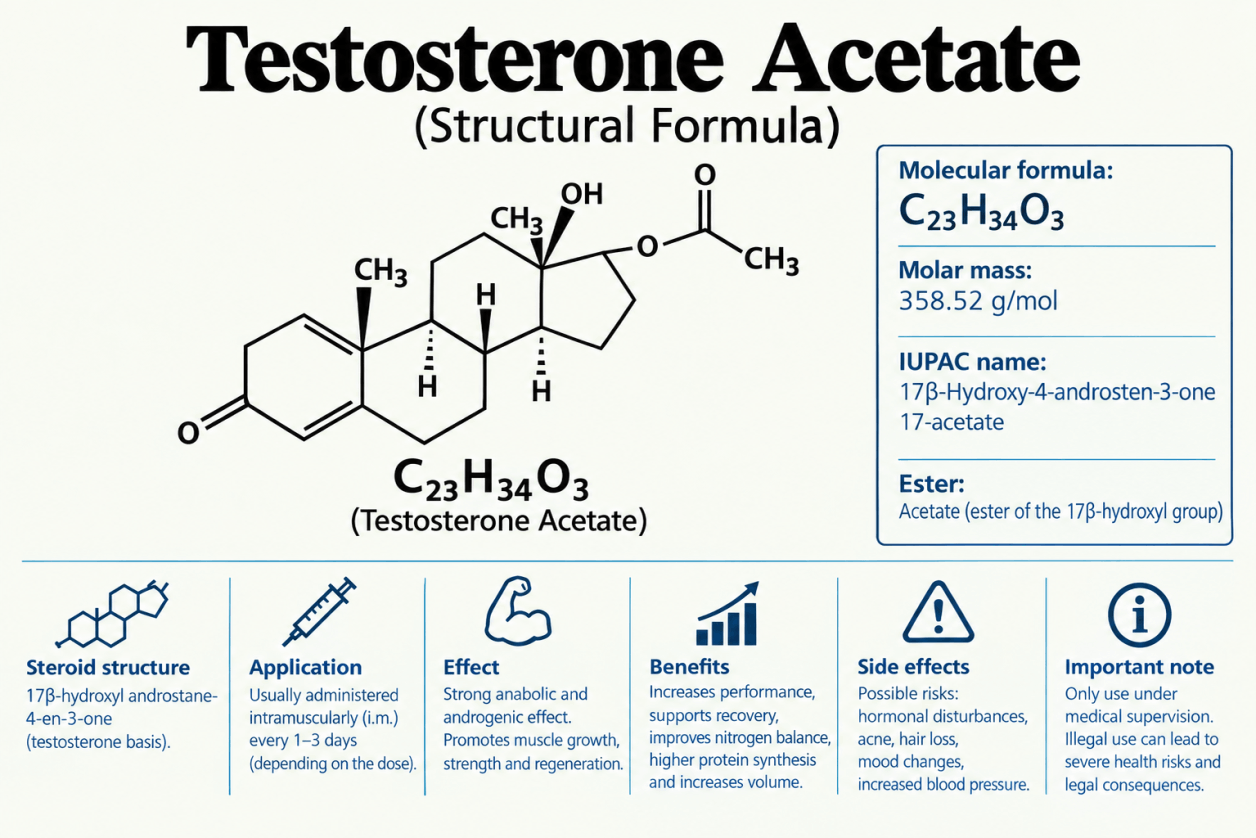
Testosterone Acetate is a chemically esterified form of the male sex hormone testosterone. The compound belongs to the group of androgens and differs from other testosterone esters primarily through the acetate group used. Scientific databases list Testosterone Acetate as a distinct compound with the molecular formula C₂₁H₃₀O₃ and a molar mass of approximately 330.5 g/mol.
In the context of bodybuilding, muscle building and strength training, Testosterone Acetate is of particular interest because testosterone plays an important role in various androgen-dependent processes in the body. However, a clear distinction should be made between the biological properties of the hormone and its medical or non-medical use.
What Is Testosterone Acetate?
Testosterone Acetate is a testosterone ester. Esterification alters the chemical structure of the original testosterone molecule. Following cleavage of the ester, testosterone is ultimately available again in the body.
Testosterone itself acts, among other mechanisms, through the androgen receptor. It can also be converted in the body into other biologically active hormones such as dihydrotestosterone (DHT) and oestradiol. These metabolic pathways are an important reason why the effects of testosterone are not limited to muscle tissue.
Testosterone and Muscle Building
Androgens are involved in various physiological processes. These include the development and maintenance of male sexual characteristics as well as processes associated with muscle mass, strength and physical performance.
For this reason, testosterone is frequently discussed in connection with muscle building and bodybuilding. However, its biological effects do not automatically mean that additional administration or use is medically safe.
What matters is whether there is a genuine medical indication for testosterone therapy and whether such treatment is medically supervised.
How Do Testosterone Esters Differ?
Testosterone can be combined with different esters. Examples include:
* Testosterone Acetate
* Testosterone Propionate
* Testosterone Enanthate
* Testosterone Cypionate
* Testosterone Depot
The esters differ chemically and influence, among other things, the pharmacokinetic properties of the respective preparation. Testosterone Propionate, for example, is hydrolysed relatively quickly to free testosterone.
Therefore: Testosterone Acetate is not simply identical to Testosterone Enanthate or Testosterone Propionate. The different esters are chemically related but distinct compounds.
What Risks Are Associated with Testosterone?
The effects of testosterone involve numerous organ systems. Medical testosterone therapy can therefore cause side effects and requires appropriate medical monitoring.
Reported effects include:
* Acne and oily skin
* Changes in body hair
* Changes in libido
* Fluid retention
* Increased haematocrit
* Suppression of the body's natural testosterone production
* Reduced sperm production
* Possible impairment of fertility
* Changes in prostate-related parameters
* Gynaecomastia
* Possible increases in blood pressure and cardiovascular problems
Medical reviews particularly highlight the potential for erythrocytosis, changes in sperm production and other hormonal side effects.
Testosterone Acetate and the Body's Natural Hormone Production
One important aspect of testosterone is often underestimated: when androgens are supplied externally, this can affect the body's natural hormonal regulation.
Testosterone production is regulated through the hypothalamic-pituitary-gonadal axis. Exogenously administered testosterone can suppress the body's own testosterone production and, in particular, sperm production.
This is particularly relevant for men who wish to have children. Testosterone therapy should therefore not be compared with an ordinary dietary supplement.
Is Testosterone Acetate a Food Supplement?
No. Testosterone Acetate is not an ordinary food supplement.
Testosterone and its esters belong within a pharmacological and hormonal context. Independent use without a medical indication and appropriate supervision is therefore not comparable to the use of protein, creatine or other conventional sports supplements.
Particularly in bodybuilding, it is important to distinguish between supplements, medicinal products and non-medical use of anabolic-androgenic steroids.
Testosterone Acetate in Bodybuilding
On the internet and within the bodybuilding community, Testosterone Acetate is occasionally discussed in connection with rapid hormonal effects and muscle building. Such claims should, however, be viewed critically.
A stronger androgenic-anabolic stimulus does not automatically mean a better or safer outcome. At the same time, hormonal changes can cause side effects that are not immediately visible.
For sustainable muscle development, progressive resistance training, adequate energy and protein intake, sleep, recovery and long-term training planning therefore remain key factors.
Why Medical Monitoring Is Important
Depending on the individual situation, medically indicated testosterone therapy may involve monitoring testosterone levels, full blood count and/or haematocrit, blood pressure and other relevant health parameters. Medical literature recommends regular monitoring to help identify potential side effects at an early stage.
Such monitoring is particularly important because hormonal side effects do not always cause symptoms immediately.
Conclusion: Testosterone Acetate Explained
Testosterone Acetate is an esterified derivative of testosterone and belongs to the group of androgens. Chemically, it is closely related to the body's natural hormone but has its own pharmacological properties due to its ester structure.
The subject is relevant to bodybuilding, muscle building, strength training and sports medicine, but should not be considered in isolation. Testosterone affects numerous biological processes and, when administered externally, can influence natural hormonal regulation, fertility and various health parameters.
Safety Information
Testosterone Acetate is not a harmless sports supplement. The use of testosterone or other anabolic-androgenic steroids for non-medical purposes can involve significant health risks. This article is intended solely for general information and education and does not replace medical advice, diagnosis or treatment. Medical use should only take place under appropriate medical supervision.