NANDROLONE: EFFECTS, PROPERTIES, RISKS & IMPORTANT FACTS
Nandrolone is one of the best-known anabolic-androgenic steroids (AAS) and has been discussed for many years both in a medical context and in connection with doping and bodybuilding. Nandrolone is particularly well known in the form of nandrolone decanoate.
The substance is scientifically interesting because it has anabolic properties while differing from testosterone in several biological characteristics. These properties have led to nandrolone being investigated medically as well as being used outside medical applications.
This article explains clearly what nandrolone is, how it works in the body, which potential effects have been described and what health risks may be associated with it.
What is Nandrolone?
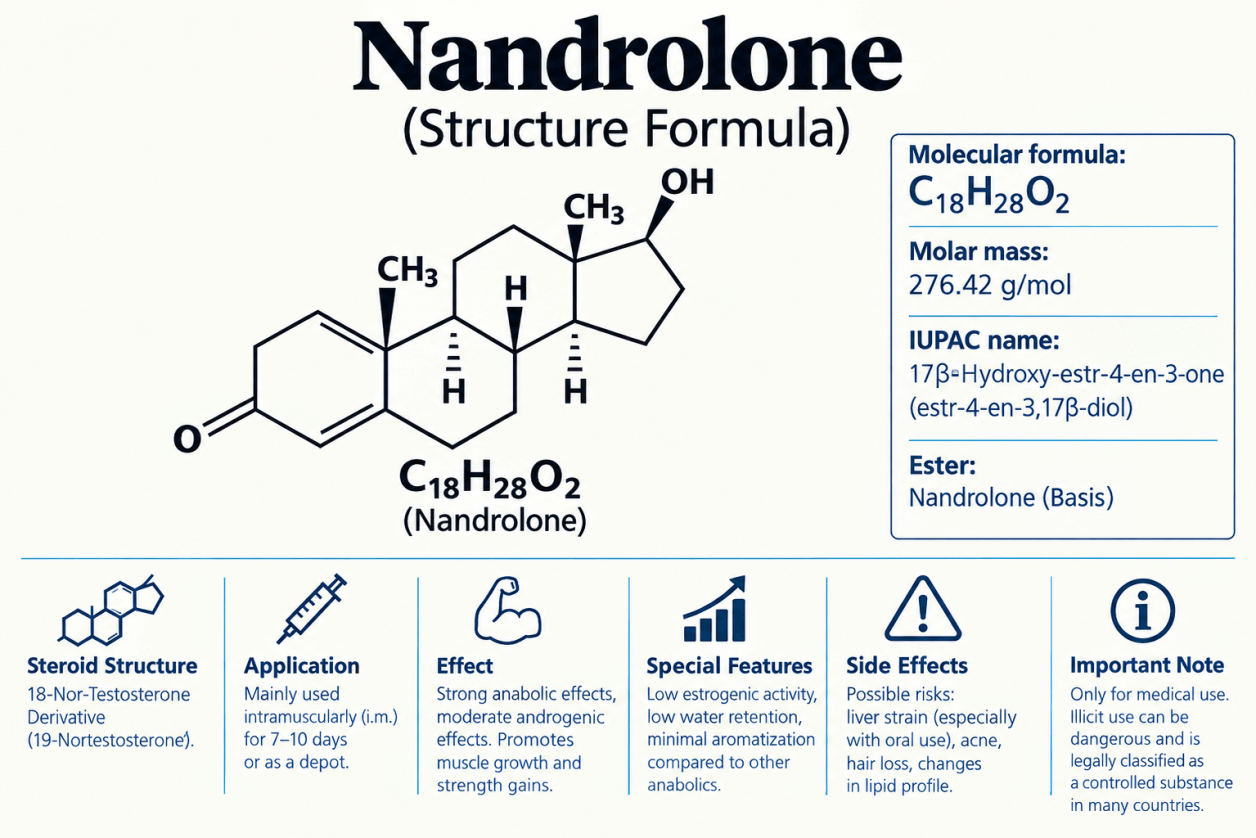
Nandrolone is a synthetic derivative of the male sex hormone testosterone. Chemically, it is also known as 19-nortestosterone.
Like other anabolic-androgenic steroids, nandrolone can bind to the androgen receptor. This influences biological processes associated, among other things, with protein synthesis, muscle tissue and other androgen-dependent functions.
However, nandrolone differs from testosterone in its chemical structure and metabolism. This can result in different effects in different tissues.
Nandrolone and Muscle Growth
Nandrolone is frequently associated with muscle growth, increased lean body mass and enhanced physical performance.
Scientific research indicates that anabolic steroids can generally influence muscle protein synthesis and the development of lean body mass. More recent studies involving nandrolone decanoate have also found changes in lean body mass. However, the significance of such findings depends heavily on the medical context, study design and population investigated.
An increase in muscle size also does not automatically correspond to an equivalent improvement in strength, health or athletic performance. These distinctions are important when interpreting study findings.
Why Is Nandrolone Sometimes Described as “Milder”?
Nandrolone is sometimes described as being less androgenic than testosterone. One reason is its different metabolism through the enzyme 5α-reductase.
This does not mean that nandrolone is harmless.
A lower androgenic effect in certain tissues does not prevent potential effects on the hormonal system, cardiovascular system, blood profile, reproductive system and metabolism.
Particularly with non-medical use, high or prolonged exposure can have significant health consequences. Scientific reviews of nandrolone decanoate describe, in particular, hormonal, cardiovascular, dermatological and psychological adverse effects.
Nandrolone and Hormones
An important aspect of nandrolone is its effect on the body's natural hormonal regulation.
The use of exogenous anabolic-androgenic steroids can suppress the body's natural production of sex hormones. This affects what is known as the hypothalamic-pituitary-gonadal axis.
Potential consequences include:
* reduced endogenous testosterone production
* changes in libido
* impaired sperm production
* fertility problems
* erectile difficulties
* changes in hormonal balance
* gynaecomastia
Current medical reviews confirm that non-medical AAS use can be associated with hormonal suppression and reproductive problems.
Nandrolone and the Cardiovascular System
The cardiovascular system can also be affected by anabolic-androgenic steroids.
Changes have been described in areas including:
* blood pressure
* blood lipid levels
* blood profile
* vascular function
* heart structure and function
More serious cardiovascular problems have also been reported with long-term or high-dose AAS misuse. These include changes to the heart muscle, arrhythmias and an increased risk of thrombotic events.
The term “milder steroid” should therefore never be equated with “lower health risk”.
Potential Side Effects of Nandrolone
Health effects can vary considerably between individuals. A systematic review of nandrolone decanoate reports, among other findings, hormonal and reproductive changes, alterations affecting the cardiovascular system, skin problems, as well as psychological and mood-related symptoms.
Potential problems include, for example:
Hormonal System
* suppression of natural hormone production
* changes in libido
* impaired fertility
* gynaecomastia
Cardiovascular System
* changes in blood pressure
* unfavourable changes in blood lipid levels
* changes to the heart muscle
* increased cardiovascular strain
Skin
* acne
* changes in sebum production
* hair loss in people with a genetic predisposition
Reproductive System
* reduced sperm production
* impaired fertility
* changes in sexual function
Psychological and Neurological Effects
* mood changes
* sleep problems
* anxiety or irritability
Not every side effect occurs in every person. Individual risk depends, among other factors, on health status, duration of use, concomitant medication and other factors.
Nandrolone in Medicine
Nandrolone has been investigated and used in certain medical contexts. This does not mean, however, that medical use can be equated with non-medical use in bodybuilding.
In medically supervised treatment, the focus is on a specific medical condition, an appropriate indication, the suitable pharmaceutical formulation and appropriate monitoring.
The use of anabolic steroids outside a medical indication is fundamentally different.
Nandrolone and Doping
Nandrolone is particularly relevant to athletes because the substance is included on the World Anti-Doping Agency (WADA) Prohibited List. Nandrolone is listed under anabolic-androgenic steroids and is generally prohibited.
Metabolites of nandrolone also play an important role in doping controls. These include 19-norandrosterone and 19-noretiocholanolone, which can occur as metabolites of nandrolone and related norsteroids.
Athletes must therefore comply with the applicable anti-doping regulations. Anyone participating in official competitions should not rely on outdated lists or information found online, but should check the current WADA or relevant sporting federation regulations.
Nandrolone in Bodybuilding
In bodybuilding, nandrolone is primarily discussed because of its association with muscle mass and anabolic properties.
The fact that a substance can influence muscle growth does not, however, indicate whether its non-medical use is medically or health-wise justifiable.
When evaluating nandrolone, both aspects should therefore be considered: its scientifically described biological effects and its potential health consequences.
Why Information About Nandrolone Matters
There are numerous personal accounts about nandrolone online. Such reports may be interesting, but they do not replace scientific research.
Problems arise particularly when individual experiences are presented as general conclusions. Differences in genetics, health status, concomitant medication and substances used at the same time can significantly alter outcomes.
Scientific literature also indicates that multiple substances are frequently used simultaneously in cases of AAS misuse. As a result, it is not always possible to attribute a particular adverse effect to one specific substance with certainty.
Conclusion: Nandrolone Considered Objectively
Nandrolone is a potent anabolic-androgenic steroid whose biological properties have been scientifically investigated for many years.
The substance can influence processes associated with muscle tissue and lean body mass. At the same time, nandrolone can affect the body's hormonal system and may be associated with risks to reproductive health, the cardiovascular system, metabolism and other organ systems.
It is therefore particularly important to distinguish between medical use and non-medical use in sport.
For competitive athletes, there is the additional consideration that nandrolone is listed by WADA as a prohibited anabolic substance.
Safety Information
Nandrolone is not an ordinary food supplement. Non-medical use of anabolic steroids can involve significant health risks. This article is intended for information purposes only and does not replace medical advice. Dosages, usage protocols and recommendations for performance enhancement are deliberately not provided.
Anyone who has used nandrolone or other anabolic-androgenic steroids and develops health problems should seek medical assessment.