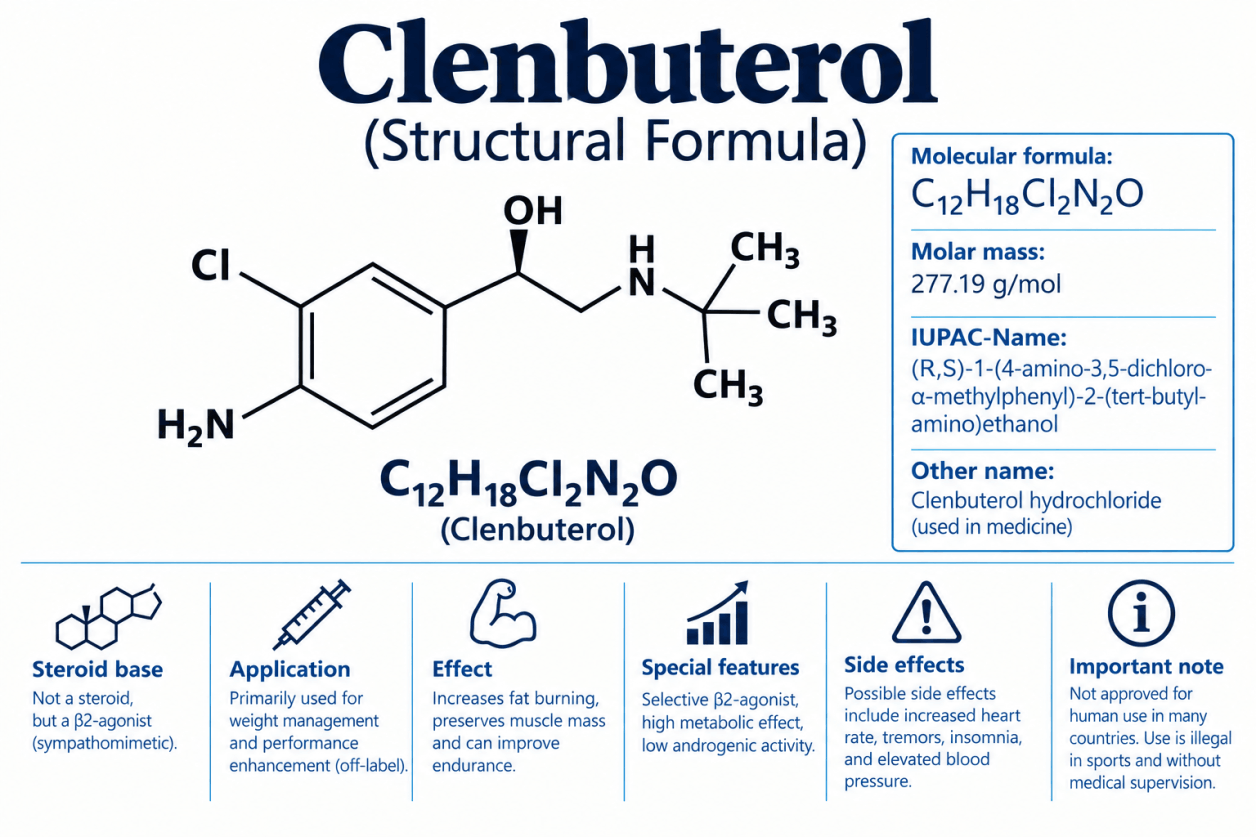
CLENBUTEROL: EFFECTS, RISKS AND IMPORTANT FACTS
Clenbuterol is a substance that is repeatedly discussed in bodybuilding, fitness and endurance sports. It became particularly well known because of its stimulatory effects on the sympathetic nervous system and its perceived relevance to fat loss and performance enhancement.
At the same time, the substance is often underestimated. Clenbuterol can place considerable strain on the cardiovascular system and has been associated in medical case reports with potentially serious complications. A systematic review of cases involving athletes documented, among other complications, cardiac arrhythmias, chest pain, myocardial injury, myocarditis and myocardial infarction.
What is Clenbuterol?
Clenbuterol is a **long-acting beta-2 agonist**. The substance acts on specific adrenergic receptors and can therefore influence factors including heart rate and metabolism.
Although clenbuterol is often associated with medicines used to treat respiratory conditions, its regulatory status varies internationally. In the United States, for example, clenbuterol is not approved by the FDA for human use.
In sport, by contrast, clenbuterol is frequently misused as a substance intended to enhance performance or alter body composition.
Why is Clenbuterol Used in Bodybuilding?
Interest in clenbuterol is primarily based on the belief that the substance can influence energy expenditure and fat mobilisation.
The fitness community therefore often refers to so-called “fat-burning” properties. However, this does not mean that clenbuterol is a safe or advisable method of reducing body fat.
Particularly in performance-oriented training, a distinction should be made between a theoretical pharmacological effect and a health benefit that can be considered acceptable.
There is also a lack of convincing evidence for a favourable risk-benefit profile when used for performance enhancement. A scientific review of clenbuterol use in athletes instead concluded that the documented risks are not matched by sufficiently established sporting benefits.
Clenbuterol and Fat Loss
Clenbuterol is frequently associated with fat loss, definition and weight reduction. This is why the substance regularly appears in discussions about so-called “cutting” phases.
However, a change in body weight does not automatically mean that a substance is suitable for controlled and sustainable fat loss.
Long-term changes in body composition are fundamentally based on factors such as:
* calorie balance
* a balanced diet
* adequate protein intake
* resistance and cardiovascular training
* recovery
* sleep and long-term training consistency
Clenbuterol does not replace any of these factors.
What Side Effects Can Clenbuterol Cause?
The potential health risks are among the most important aspects to consider when discussing clenbuterol.
Possible symptoms and toxic reactions may include:
* rapid heartbeat and significantly increased heart rate
* palpitations
* tremor
* restlessness and nervousness
* headaches
* nausea
* dizziness
* changes in blood pressure
* disturbances in potassium balance
* elevated blood glucose levels
Severe poisoning has also been associated with cardiac arrhythmias, myocardial injury, myocarditis, myocardial ischaemia and myocardial infarction. In some cases, life-threatening complications have been reported.
A Particular Concern: Cardiovascular Strain
One of the main reasons clenbuterol can be dangerous is its effect on the adrenergic system.
The heart can respond with a significant increase in heart rate. At the same time, electrolyte disturbances may occur. In particular, hypokalaemia, meaning an abnormally low potassium level, has been reported in cases of poisoning.
This combination can place considerable stress on the heart.
Clenbuterol should therefore not be regarded as an ordinary food supplement or harmless “fat burner”.
Clenbuterol in Competitive Sport
The anti-doping status is also relevant for athletes.
Clenbuterol is included on the WADA Prohibited List and is classified there among the prohibited anabolic agents. This makes the substance relevant under anti-doping regulations for athletes subject to the WADA Code.
Anyone taking part in competitions should therefore always check the prohibited list applicable to their particular sporting federation and competition year.
Why the Source of a Product Also Matters
Another concern is the quality of products obtained from unregulated sources.
For preparations sold online, the actual active ingredient content, purity and composition may differ from the information stated on the label. This can make the actual level of risk difficult to assess.
With a substance that can have potentially significant effects on heart rate and electrolyte balance, an unknown composition can be particularly problematic.
Clenbuterol Is Not an Ordinary Fat Burner
The term “fat burner” can create a misleading impression.
Clenbuterol is fundamentally different from freely available products such as caffeine or ordinary food supplements. It is a pharmacologically active beta-2 agonist for which significant health risks have been documented in cases of misuse.
A stronger effect does not therefore automatically mean a better result.
Safety Information
Clenbuterol should not be used independently for weight loss, performance enhancement or body shaping.
This article does not constitute medical advice and does not provide instructions regarding the use, dosage or combination of clenbuterol.
Anyone experiencing a rapid heartbeat, chest pain, breathing difficulties, severe tremor, dizziness, circulatory problems or other unusual symptoms following possible clenbuterol exposure should seek medical attention immediately.
Particular caution is warranted in people with known cardiovascular conditions or when other stimulant substances or substances that increase heart rate are being used at the same time.
Conclusion: Clenbuterol Considered Critically
Clenbuterol is a pharmacologically active substance that has become particularly well known in bodybuilding and fitness because of its potential effects on fat metabolism and physical performance.
However, the potential health risks are an essential part of the subject. Scientific case reports have documented significant cardiovascular complications and electrolyte disturbances in association with clenbuterol exposure.
Anyone looking to improve their body composition should therefore focus on the fundamentals: structured training, an appropriate diet, adequate recovery and long-term consistency.
Muscle growth and fat loss do not need to come at the expense of health.